
© Howard Gardner 2026
As the creator of the theory of multiple intelligences, I have a lot of experience noticing how individuals react to its claims—and, in particular, what evidence might convince a skeptic to consider “MI theory” more seriously.
Contrast the attitudes of two groups with varying stances toward understanding human intellect: On one side, there are the psychometricians—psychologists whose livelihoods entail creating tests and determining how individuals perform on variants of these tests.
On the other, there are the educators who have taught many students a variety of topics and procedures over many years.
The comparison just introduced is an easy one: Psychometricians tend to have a love affair with the IQ test—and, whatever its flaws, they still embrace it. For them, the idea that there can be a number of relatively independent capacities worthy of the term “intelligence”—and that an individual might be strong in one, weak in a second, and mediocre in a third—is difficult to take seriously. Their standard statistical measures lead to the conclusion there is just one general intelligence—even though their tests only assess a narrow range of abilities, primarily linguistic and mathematical. And if some individuals happen to have a jagged profile of strengths and weaknesses in other areas besides those measured by the IQ test—then the outlying strong or weak capacities cannot, by definition or by fiat, be components of Intelligence.
In contrast, consider those educators (or parents) who have encountered some students who are strong across the curriculum, and others who struggle on a range of school assignments. Even such observers recognize that a single dimension proves far too simple a metric along which to array most individuals. Accordingly, these persons are relatively open to a theory of multiple intelligences.
As for those who have proven indifferent or hostile to “MI theory,” they may still be convinced that other forms of intelligence exist. The most promising candidate is emotional intelligence, as first described by psychologists Peter Salovey and John Mayer, and brought to the attention of the wider public by psychologist-and-science-writer Daniel Goleman. Of course, the existence of a test that purports to measure EQ lends potency to this claim—especially if scores on EQ often differ substantially from scores on a standard IQ test. But many IQ “hard hats” ignore discussions of emotional intelligence; to their way of thinking, emotions reside in a universe apart from intellect.
However: In this essay, I explore another factor that might convince a skeptic to take MI theory seriously. How does one make sense of individuals who do not seem explicable in terms of a single intelligence and the consequent score on an IQ test? My approach: consider journalistic treatments of celebrities from different sectors who seem to exemplify the tenor of MI theory: actor-turned-politician Ronald Reagan and basketball star LeBron James. As a bonus, I propose a form of intelligence that I would not have thought of…had I not attempted to understand the American political landscape over the last decade.
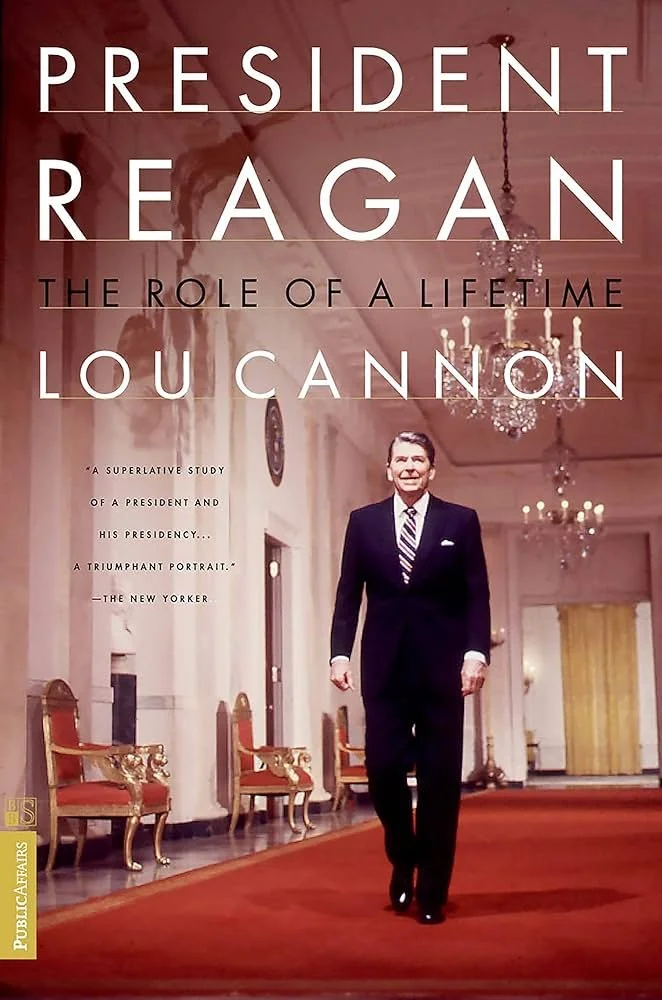
For many years, political reporter Lou Cannon sought to make sense of his fellow Californian Ronald Reagan (elected Governor in 1966, President in 1980). Reagan’s success at the ballot box surprised Cannon because Reagan seemed so different from other successful political figures of the era, who typically were lawyers or businesspeople or military officers.
While working on a major biography of Reagan, Cannon reached out to me to test his conclusion: Reagan lacked the logical and linguistic skills of most politicians on the national stage. He was skilled at weaving narratives (e.g., about the city on the hill), but he lacked skill in using language to develop, present, and refute arguments. Where he really stood out was in his understanding of other people, that is, in his interpersonal intelligence and emotional intelligence. He had the capacity to sense what others wanted to hear and needed to hear and to express these notions in a compelling fashion. He was also skilled at making others—ranging from Speaker of the House Tip O’Neill to Soviet leader Mikhail Gorbachev—feel appreciated, listened to, motivated to act cooperatively.
A point for MI theory.
As 2025 was drawing to a close, journalist Kevin Merida reflected on the remarkable career of basketball star LeBron James. In an article called “the Intellect of Lebron James,” Meridan conceded that James was not an intellectual, not book smart (he could not even articulate the message of a book that he was recommending to others). But whatever one might make of these scholastic failings, Meridan praises James’ spatial intelligence as well as his bodily-kinesthetic intelligence—clearly essential for any gifted athlete. The journalist also maintains that James has exceptional insight into his own strengths—including how they have been changing as his body is less able to handle stress (an intelligence which many athletes and performers lack). Without invoking my terminology, Meridan indicates that James (in contrast to many other aging individuals) also stands out in terms of his intrapersonal intelligence.
More points for MI theory.
Let me shift gears one last time.
When Donald Trump entered the national political arena a dozen years ago, reporters and pundits frequently found themselves at a loss as they sought to understand his obvious skills and his widespread appeal. Rarely did Trump exhibit the analytic skills of other politicians or even of other businesspeople—though, clearly, he was able to “make the deal.” Like Reagan, Trump clearly had the skills of a performer—though it was his own persona (rather than ones created by movie or TV writers) that stood out.
In 2015, during Trump’s first presidential campaign, I was asked by journalists for my views about the candidate’s profile of intelligences. While I scarcely had done any kind of study—indeed, I had never encountered anyone like Trump—I had a thought which still rings true—perhaps even more true a decade later.
Donald Trump is well-described as having “media intelligence”—indeed “media genius.” He has a subtle and intuitive sense of how the media of his time work—television (especially cable news), social media (especially Truth Social and X), and more recently creations and contrivances of AI. It’s as if he had studied each medium over the course of his lifetime (including movies and television of the 1950s and 1960s) and mastered techniques and insights on which he could skillfully draw as he entered the political arena.
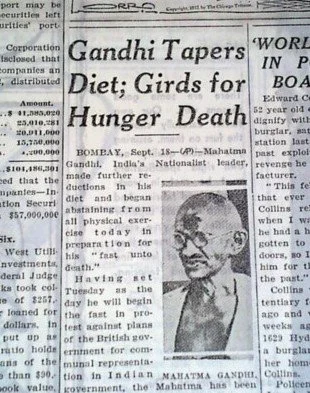
In that way, Donald Trump resembles several successful political figures of the last century or so: Franklin Roosevelt (and Adolf Hitler) drawing on radio; John Kennedy on television; Ronald Reagan on the movies; and, intriguingly, Mahatma Gandhi, whose hunger strikes were picked up by telegraph, and immediately reported around the world. A teletyped message that Gandhi might die any day created such pressure on the British government that it had to address seriously the issues to which Gandhi was demanding attention.
It may seem needless to say—but it is also necessary—that any intelligence can be used neutrally, benignly, or malignantly. Churchill, Roosevelt, and Hitler all mastered the radio—but to very different ends.
So much for the case that I seek to make. Standard IQ tests may help to predict success in the academic environment of the 20th century. But when it comes to understanding political figures like Ronald Reagan, athletes like LeBron James, or media phenomena like Donald Trump, an “MI perspective” can be helpful, perhaps even revealing. Clearly IQ cannot explain these figures, and it is doubtful that Reagan, James, or Trump had/have exceptionally high IQs.
Acknowledgements
Many thanks to Kirsten McHugh, Annie Stachura, and Ellen Winner for extremely useful feedback on earlier versions of this essay.
References
Cannon, L. (2000). President Reagan: The Role of a Lifetime. Public Affair.
Goleman, D. (1995). Emotional intelligence. Bantam Books.
Merida, K. (2025). The intellect of LeBron James. Washington Post.
Salovey, P. and Mayer, J. (1990). Emotional intelligence: Imagination, Cognition, and Personality. Baywood Publishing Company.