
© Howard Gardner 2026
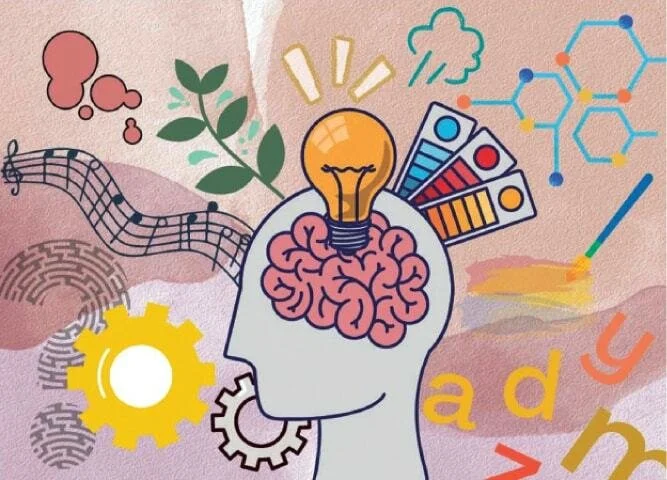
Over forty years ago, I introduced the idea of “multiple intelligences.” Based on an extensive review of research in fields ranging from anthropology to neuroscience, I critiqued the theory of general intelligence—as put forth by generations of psychometricians. Instead of positing a single intelligence—on which all human beings could be assessed, arrayed, and compared—I proposed that all human beings have a set of relatively separate intellectual computational systems. Standard IQ tests assess linguistic and logical-mathematical capacities. But a broad view of human intellectual capacities should also include spatial, musical, bodily-kinesthetic, interpersonal and intrapersonal intelligences. A decade later, I added an eighth intelligence—naturalist intelligence—the capacity to make relevant distinctions among various plants, animals, rocks, clouds, and other natural phenomena. I have toyed with the idea of other intelligences—but I have not had the time or motivation to carry out the same detailed multi-year analyses which led to the identification of eight discrete intelligences.

When it comes to matters of the mind, IQ is deemed a life sentence!
When I first proposed MI theory, I took care to separate linguistic capacities from logical-mathematical capacities. I provided ample evidence for the existence of two distinct capacities. Even this proposal evoked critiques from the most fervent proponents of a single-IQ g-perspective—according to which language and mathematics were closely and perhaps inextricably linked.
Recently, however, researchers have obtained convincing new evidence for my contention.
In research carried out at MIT’s McGovern Institute for Brain Research, scientist Evelina Fedorenko and her colleagues have demonstrated the independence of these two faculties (Fedorenko & Varley, 2016). It turns out that individuals can succeed on tasks that involve logical reasoning, even when they are aphasic—exhibiting significant impairment of their linguistic capacities as a result of injury to their cortex.
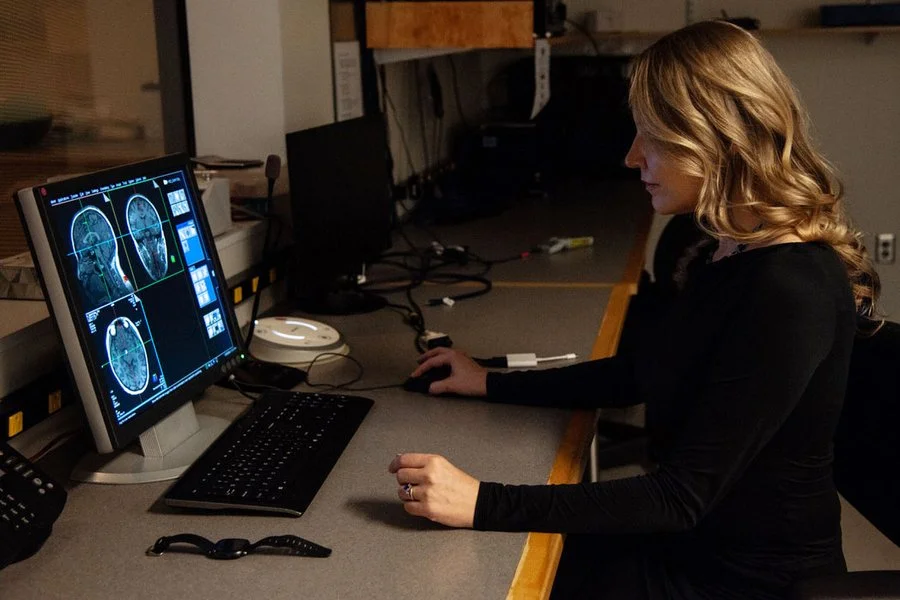
Evelina Fedorenko at the McGovern Institute for Brain Research
The research team worked with two patients with severe aphasia. These patients were unable either to produce or to understand ordinary language. The researchers administered language-free games where the patients were challenged to infer relationships between sets of numbers. For example, they had to examine a set of geometric patterns and then identify another pattern that completed a matrix. Or they had to infer a rule which converted one set of digits to another (e.g., reversing the digits or dropping those above a certain value).
In addition to this demonstration with aphasic patients, the investigators also examined the neural activity in healthy individuals who were engaged in logical reasoning. Here, as well, the investigators demonstrated the separation of linguistic and logical capacities. As they express it, “The brain’s language system is not engaged for either inductive reasoning (when participants identify hidden rules) or deductive reasoning (when they assess the validity of syllogistic conceptions).”
Turning the clock back
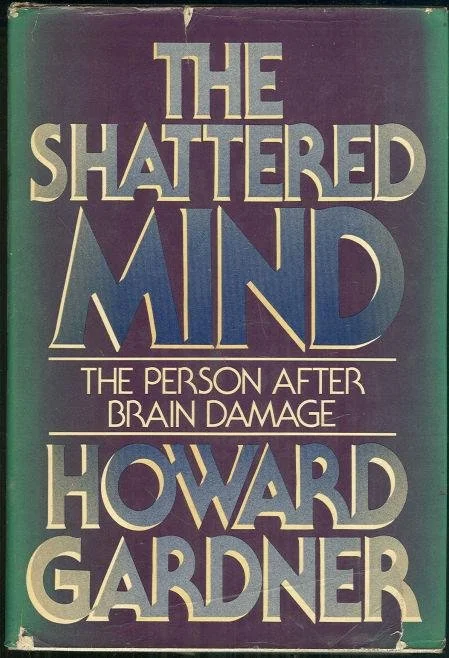
A major impetus for the development of MI theory was the decade during which I had studied patients with various forms of cortical brain damage. As outlined in my 1975 book The Shattered Mind: The person after brain damage, the lamentable consequence of focal brain disease is the predictable loss of certain computational capacities, while others are wholly and largely spared. By 1983, I had become convinced that the psychological theory of multiple intelligences is consistent with our growing knowledge of neurology, neuroscience, and neuropathology. Now, thanks to the work of the Fedorenko and colleagues, as well as that of other research teams, we can not only confirm this portrayal of human cognition but also monitor and measure neural activity as it unfolds.
If I were to revisit the theory in the second quarter of the 21st century, I would undoubtedly introduce some tweaks, and perhaps even propose an additional intelligence or two—with the concomitant supporting evidence, of course. But what is most satisfying today is the continuing stream of evidence that supports the basic claims of MI theory, as well as the emergence of novel findings that provide fascinating details, even as they foreground interesting and unexpected phenomena. And—most important to a scholar—raise new questions.
REFERENCES
Fedorenko, E., & Varley, R. (2016). Language and thought are not the same thing: evidence from neuroimaging and neurological patients. Annals of the New York Academy of Sciences, 1369(1), 132–153. https://doi.org/10.1111/nyas.13046
Gardner, H. (1975). The shattered mind: the person after brain damage. Knopf.
Gardner, H. (1983). Frames of mind: the theory of multiple intelligences. Basic Books.
Gardner, H. (1994). Intelligence reframed. Basic Books.
Gardner, H. (1999). Intelligence reframed. Basic Books.
ACKNOWLEDGMENTS
For valuable comments on an earlier draft, I thank Kirsten McHugh and Ellen Winner.