
© Zylfije Tahiri, PhDc (Doctoral researcher, South East European University, North Macedonia)

The theory of multiple intelligences, which I view as a beacon of hope and salvation for humanity, transcends the traditional boundaries of cognitive development, teaching, and learning strategies. It significantly influences our daily lives and fosters hope and self-awareness in light of current complexities. Thanks to this theory, humanity may be able to reflect on its diverse capabilities, enabling individuals to recognize their potential to contribute to their wider communities and to address global challenges.
Climate change—a pressing global issue—profoundly affects and shapes our daily existence. Warnings about rising temperatures, ecological degradation, biodiversity loss, and increasing unsustainability are nearly a daily occurrence. Consequently, climate change is often examined from political, economic, scientific, and technological innovation viewpoints. However, despite decades of scientific evidence and political negotiations, the achievement of significant changes in social behavior has proven elusive. This reality indicates that climate change is not merely a social or technological challenge; it is, at its core, a human and educational crisis. Effectively addressing climate change requires developing human capacities that shape values, behaviors, relationships, creativity, and ecological responsibility.
Howard Gardner’s theory of multiple intelligences offers a valuable educational perspective that warrants greater attention within the context of climate change. Although this theory has had a significant impact on educational practices, its broader implications for sustainability and climate action remain largely unexamined.
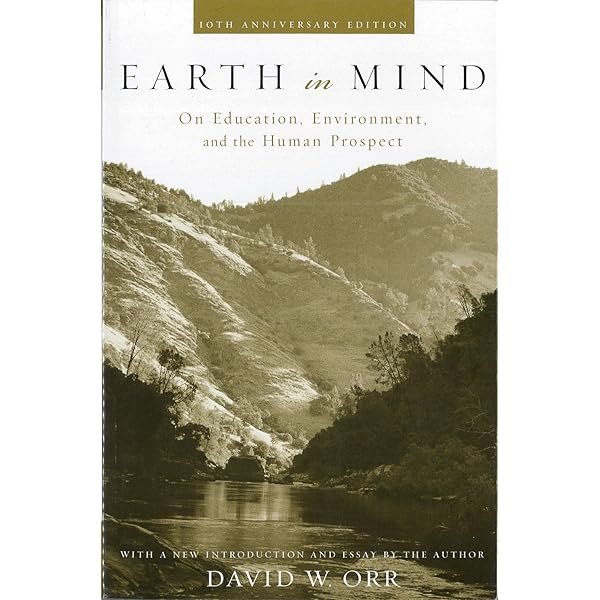
Human behavior is pivotal in the fight against climate change. Despite unprecedented access to climate data, ecological degradation continues at an alarming pace—and we all must take on a greater sense environmental responsibility. Educational systems often emphasize cognitive achievement while neglecting emotional, ethical, ecological, and interpersonal aspects of human development. This discrepancy reveals a deeper educational and psychological challenge that must be addressed. Fundamentally, it has been asserted that societies are confronted with an information crisis as well as a wisdom crisis. In his book Earth in Mind, David W. Orr criticizes modern education for producing "technically proficient" graduates who lack ecological consciousness and sustainable ethics.
Howard Gardner's Theory of Multiple Intelligences holds significant transformative potential for addressing climate change; it recognizes the diverse human capacities essential for comprehending and responding to environmental crises. Tackling climate change requires harnessing human potential beyond mere scientific knowledge. It involves empathy for vulnerable populations, an awareness of consumption patterns, collaborative problem-solving, creative innovation, and a profound connection to nature. These competencies closely align with the broader categories of intelligence identified by Gardner.
Each of our intelligences offers the potential to contribute to the mitigation of climate change, providing a diverse approach to addressing this pressing global challenge. In the following sections, I will examine how individuals with specific intelligences can play a vital role in tackling this issue and promoting sustainability.

Beginning with naturalist intelligence, which is essential for environmental education, Gardner defines this intelligence as the ability to recognize, categorize, and engage meaningfully with the natural world. However, it is noteworthy that individuals in urban areas are increasingly detached from nature. This disconnection has resulted in what Louv (2005) terms an increasing detachment from nature. Such a disconnection may well adversely affect people’s moral obligation toward the environment and diminish their empathy for environmental issues and sustainability efforts. Naturalist intelligence can be fostered through environmental education. This type of education not only enhances students' ecological awareness but also fosters a deeper emotional connection to environmental conservation. This education is mainly manifested through updated multidisciplinary curricula at all levels when the green classrooms are applied.
Addressing climate change demands substantial effort, commitment, creativity, and innovation. It is essential to recognize that mitigating climate change cannot rely solely on environmental awareness and education. Interpersonal intelligence is another key factor in this endeavor. Individuals with strong interpersonal skills play a vital role in engaging in significant global discussions about climate change mitigation. They frequently participate in summits, conferences, and international meetings, where they contribute to the formulation of critical policies aimed at tackling this urgent issue.
Intrapersonal intelligence is also important in addressing climate change. Tackling this issue often forces individuals to confront uncomfortable questions about their own lifestyles, consumer habits, ethical responsibilities, and the long-term impact of their actions on the environment. Transformative environmental education should not only inform students about carbon emissions; but this facet of pedagogy should also take into account the psychological factors of denial, anxiety, apathy, and overconsumption. This process of reflection demands a heightened sense of emotional awareness and intelligence. Sustainability education must encompass transformative learning experiences that can reshape personal values and worldviews. As a result, intrapersonal intelligence may well prove key to translating environmental knowledge into sustainable behaviors (Sterling, 2001).
Spatial intelligence, along with linguistic intelligence, plays an essential role in addressing climate change and fostering sustainability. The conversation around climate increasingly depends on storytelling, sharing ideas, imagery, influencing the public, and communicating through media. Scientific papers and reports seldom lead to significant changes in behavior. Depictions of environmental damage, heartfelt narratives, documentaries about the environment, and sharing climate stories have a much stronger effect on engaging the public than abstract statistical information. From this angle, climate communication can be viewed as a blend of various intelligences aimed at enhancing collective ecological awareness.

The New York Times “Climate Issue” (April 2019)
People with other blends of intelligences—such as musical, mathematical, bodily-kinesthetic, and existential—can also make significant contributions to climate change mitigation and sustainability. For example, musicians van communicate these issues emotionally and culturally through performances, digital media, soundscapes, and so on. Mathematicians can play an important role because they are willing and capable of designing renewable energy, modeling climate, and analyzing scientific data, as well as inventing technological tools that enable digital production. Bodily-kinesthetic intelligence can support and mitigate this phenomenon through practical action, ecological craftsmanship, architecture, recycling practices, and/or sustainable agriculture. Finally, people with high existential intelligence are more likely to assume a philosophical stance. Their contribution in this context lies precisely in the fact that they significantly may take a moral perspective toward issues of the environment, as well as reflect on human-nature coexistence. These individuals encourage a deep reflection on ecological justice and sustainable survival.
Considered as a whole, the application of MI theory requires critical reflection. Currently educational systems continue to rely on standardized tests, measurable outcomes, and narrowly defined academic achievements. These systems frequently exclude creative, emotional, ecological, and socially oriented forms of intelligence. As a result, students may graduate with strong technical skills but be disconnected from ethical and environmental responsibilities. While educational structures frequently promote competitive individualism, excessive consumption, and fragmented thinking, this disparity highlights a larger contradiction in modern education.
In these increasingly complex times, education must prepare students to participate responsibly in interconnected ecological systems as well as for economic productivity. According to this viewpoint, sustainability is more than just another classroom topic—it is a fundamental educational orientation. The theory of multiple intelligences is valuable precisely because it recognizes the complexities of human potential while rejecting reductive understandings of intelligence that focus solely on a narrow conception of cognitive performance.
What I believe is critical: Climate change topics can be incorporated into English classes through debates, storytelling, reflective writing, collaborative projects, environmental campaigns, multimedia creation, and experiential learning activities that engage multiple intelligences comfortably and at a reasonable pace and rhthm. This is because English, as a global language, allows young people to travel abroad and participate in global discourses on climate change or complex global problems, serving as a key to the pursuit of knowledge and evidence.
In order to combat climate change, we must consider how we educate future generations. Technological and scientific education alone will not achieve this goal; policymakers of educational curricula and the education system must also prioritize education for awareness, ethics, and human behavior, as MI theory constantly reminds.
In conclusion to this discussion: Our mental abilities, talents, and intelligence in general are extremely valuable. Global challenges such as climate change and sustainability necessitate dedicated work and a diversity of intelligences to achieve this goal. In this complex world, we must be mindful of how we educate and produce for the future of Planet Earth—which is not only our home, but home to millions of other creatures.
ACKNOWLEDGMENTS
For their comments and suggestions about earlier drafts, I thank Howard Gardner and Annie Stachura.
REFERENCES
Gardner, H., 1983. 2026 Frames of mind: The theory of multiple intelligences. New York: NY: Basic Books. new edition April 2026
Gardner, H., 1999. Intelligence reframed: Multiple intelligences for the 21st century. New York: NY: Basic Books.
Louv, R., 2005. Last child in the woods: Saving our children from nature-deficit disorder. Chapel Hill: NC: Algonquin Books.
Nations, U., 2015. Transforming our world: The 2030 agenda for sustainable development, New York: NY: United Nations.
Orr, D. W., 2004. Earth in mind: On education, environment, and the human prospect (10th anniversary ed.). Washington, DC: Washington, DC: Island Press.
Sterling, S., 2001. Sustainable education: Re-visioning learning and change. Totnes, England: Green Books..
UNESCO, 2020. Education for sustainable development: A roadmap, Paris, France: UNESCO.
Wals, A. E. J., 2015. Beyond unreasonable doubt: Education and learning for socio-ecological sustainability in the anthropocene. International Review of Education, 61(3), p. 329–347.